The Critical Role of Pretend Play in Early Language Development
The Critical Role of Pretend Play in Early Language Development
If you've ever watched a child use a spoon as a rocket, or heard them insist their teddy bear has a fever and needs a doctor, then you've seen pretend play in action. It may look like simple fun, but what's happening inside their little brains is much more powerful than it seems.
What is Pretend Play?
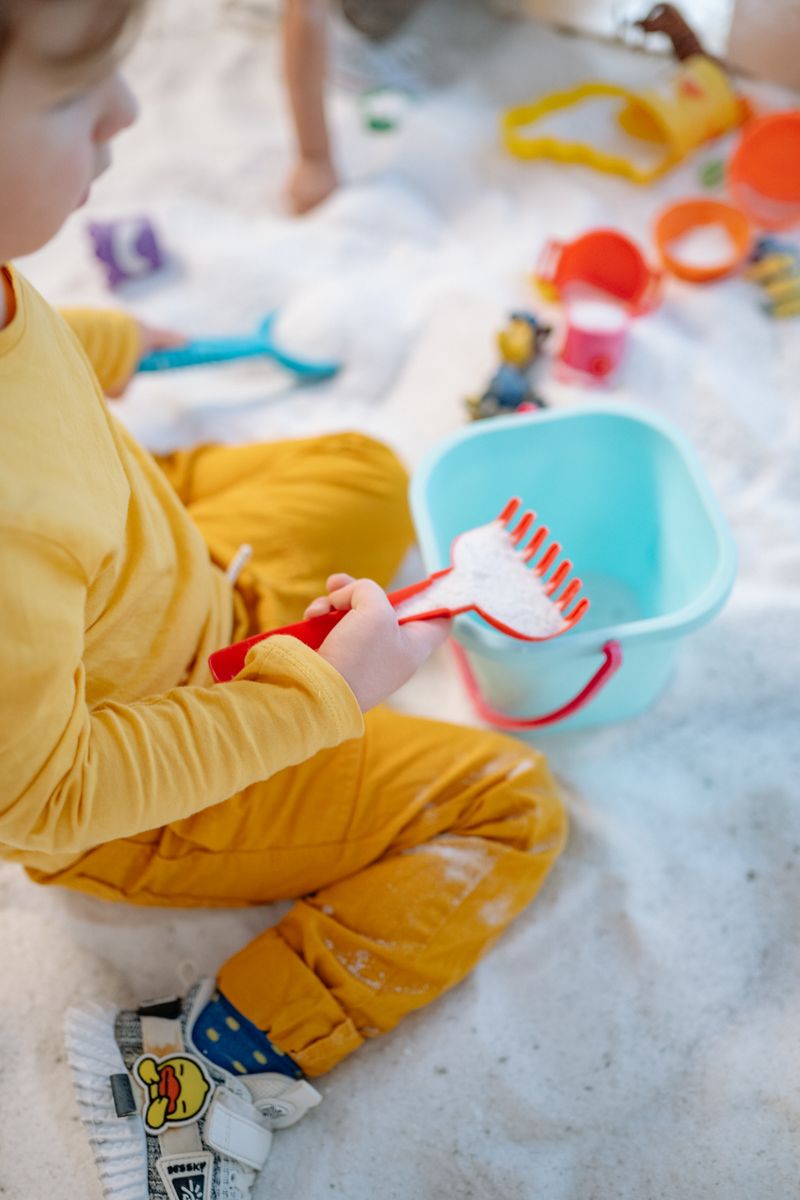
Pretend play (also called symbolic play, imaginative play, or make-believe) is when children use objects, actions, or ideas to represent something other than their literal meaning. A cardboard box becomes a spaceship. A banana becomes a telephone. A child "feeds" a doll with an empty spoon.
This kind of play is not just entertaining — it is one of the most important cognitive and linguistic activities a child can engage in.
When Does Pretend Play Begin?
Pretend play begins around age 2, but it becomes essential between ages 3 and 6, when children are developing the core building blocks of language and thought.
One study found that with support, autistic children improved their pretend play and language through a simple, structured play-based intervention. Children with delayed language, social challenges, or developmental differences (such as autism) can particularly benefit from targeted pretend play experiences.
How Pretend Play Supports Language Development
Pretend play doesn't just help with imagination — it directly supports language development. Research shows that children who engage in rich pretend play tend to develop stronger vocabulary, better storytelling skills, and more advanced grammar.
One large study of over 7,000 children found that those who played imaginatively had faster gains in both receptive (understanding) and expressive (speaking) language skills — especially among children on the autism spectrum.
Here's how pretend play helps language:
- Children use more descriptive language as they explain what's happening
- They learn to sequence events ("First, I'll bake the cake, then we'll have the party")
- They practise narrative structure: characters, settings, problems, and solutions
- They expand their vocabulary — including words for emotions, actions, and abstract ideas
- The back-and-forth of collaborative play is natural conversation practice
Stages of Pretend Play Development
| Age | Typical Pretend Play |
|---|---|
| 12–18 months | Simple imitation — pretending to drink from an empty cup |
| 18–24 months | Object substitution — using a block as a car |
| 2–3 years | Sequences — feeding, then putting doll to bed |
| 3–4 years | Role play — being a doctor, teacher, parent |
| 4–6 years | Complex scenarios with other children, narrative arcs |
How to Support Pretend Play at Home
Follow the child's lead. Join in with whatever they are already doing, rather than directing the play. Your role is to be an enthusiastic play partner, not a teacher.
Add language to the play. Narrate what's happening: "Oh no! Teddy is sick. What shall we do?" This models vocabulary and narrative structure.
Use simple, open-ended materials. Cardboard boxes, scarves, pots and pans, and wooden blocks invite more creative play than complex electronic toys.
Read picture books together. Books are a rich source of story structure, character, and vocabulary that children carry into their play.
Don't rush to fix or correct. Pretend play is not meant to be accurate. A "wrong" answer in play is often a sign of creative thinking.
When to Seek Help
If your child shows little or no pretend play by age 2–2.5, or if their play seems repetitive, rigid, or focused on lining up or sorting objects rather than imaginative scenarios, it is worth speaking with a Speech-Language Pathologist or Developmental Paediatrician.
Contact our DCCD team for a free enquiry if you have concerns about your child's play and language development.
Test Your Understanding
Answer all 3 questions correctly to unlock your free printable tip sheet.
Why is pretend play important for language development?
Boosting Language Through Play — 5 Tips
• Provide simple props — a box becomes a car, a cup becomes a phone
• Follow your child's lead: join their imaginary world, don't redirect it
• • •